


The difference between a green jacket and heartbreak at Augusta has never been about the swing. It's about what the swing didn't know.
There is no sound in golf quite like the CBS theme song on the first Thursday in April. Something resets. Winter is over. The season has a pulse again. And somewhere in Augusta, the pines are swaying in a breeze that will matter more than anyone wants to admit.
We celebrate the Masters for its crowning moments. Tiger on 18. Nicklaus thirty years before him. But the Masters is just as often decided by the moments nobody celebrates. The shots that fell short. The ones that drifted. The swings that looked perfect leaving the clubface and ended up at the bottom of Rae's Creek.
The force that tips the balance? Wind. It swirls through the pines, shifts between tee and green, and turns a committed swing into the wrong number. As the 2026 Masters tees off April 9 through 12, forecasts call for steady easterly breezes with gusts pushing 15 to 18 mph by Saturday. That sounds mild. Augusta doesn't need it to sound dangerous.
These five moments show exactly how that invisible factor changes everything.
Jordan Spieth, 2016, Hole 12

Spieth is 22 years old, standing on the 12th tee Sunday with a five shot lead. Just 155 yards to another step toward back to back green jackets. His tee shot finds Rae's Creek. He drops. Hits again. Water again. Quadruple bogey. Masters gone.
He didn't forget how to swing. He lost his read on the conditions. Augusta's 12th sits in a sheltered pocket at the tee and an exposed bowl at the green. The wind you feel standing over the ball is almost never the wind the ball flies through. A shot that feels perfect at impact can lose 10 to 15 yards mid flight.
The Arccos Insight. A traditional rangefinder says 155. But it can't tell you what 155 actually plays like when a headwind eats your carry. The Arccos Smart Laser calculates true "Plays Like" distances using wind, gusts, temperature, humidity, and altitude in real time. How far right now.
Tiger Woods, 2020, Hole 12
If anyone should be immune to Augusta's tricks, it's Tiger. Five green jackets. Decades of course knowledge. And yet he made a 10 on the 12th hole in the final round.
His first shot was textbook. Controlled wedge, safely right of the pin. Never reached the green. He tried again. Same result. The swings were solid. What he misjudged was what the shot needed to carry. A subtle gust at the apex robbed just enough distance to turn a smart play into a disaster.
The Arccos Insight. Experience is invaluable. But it's still a guess. Arccos gives your instinct the data it's been missing, drawing from 1.5 billion shots to show exactly how much wind, slope, and temperature are affecting your number. Tiger's gut said the shot was right. The data would have said otherwise.

Francesco Molinari, 2019, Hole 12
Molinari was leading the Masters on Sunday. Bogey free all week. He hit a committed, well struck iron on 12. It found the water. Minutes later, Tiger played safely to center green, made par, and took control of the tournament.
The difference wasn't execution. It was margin. Short is dead and long is safe at the 12th, and Molinari's shot probably needed just a few more yards. A tiny miscalculation. A tournament altering consequence.
The Arccos Insight. When the margin is five yards, guesswork isn't enough. Arccos’ “Plays Like” distance accounts for every environmental factor to show what the shot actually requires. On a hole like the 12th, that's not a luxury.

Greg Norman, 1996, Final Round
Norman began Sunday with a six shot lead. Shot 78. Faldo shot 67. Green jacket gone.
But Norman didn't lose it on one swing. He lost it through a pattern. Approach shots repeatedly came up short. Club selections appeared slightly conservative. Augusta's firm conditions and subtle wind shifts magnified every miss. One wrong number doesn't kill you. A dozen of them across 18 holes absolutely will.
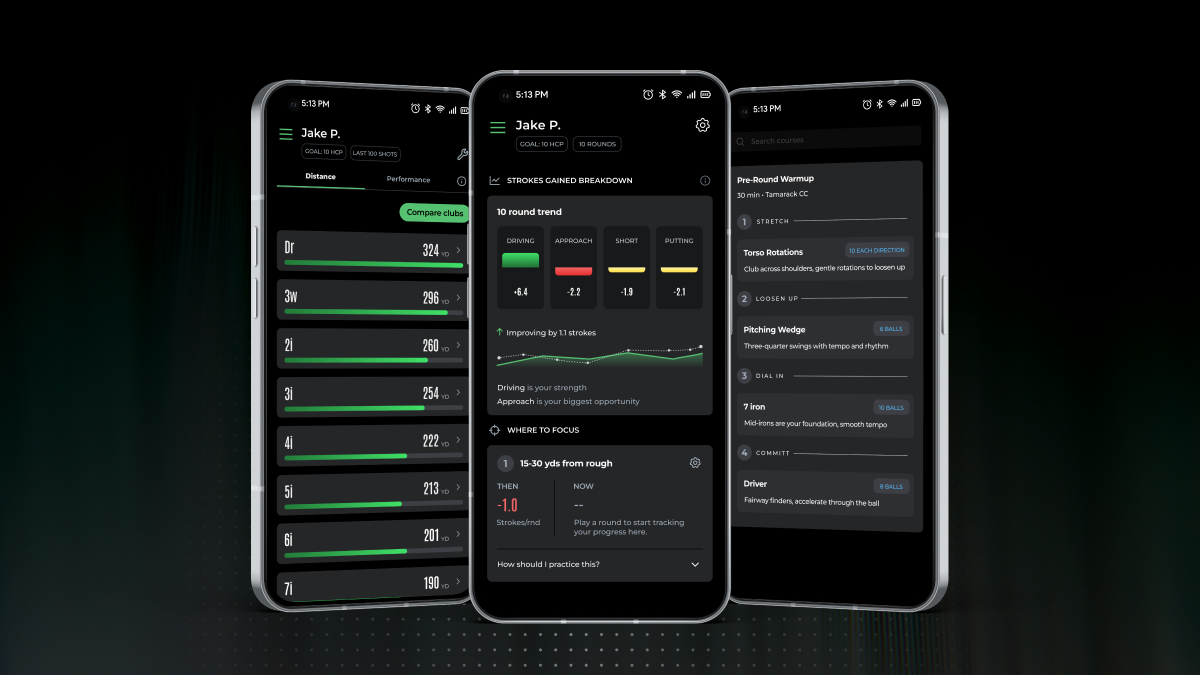
The Arccos Insight. Compounding error starts with guesswork. Arccos AI Strategy provides smart powered club recommendations based on your personal distances, your tendencies, and real time conditions. Not just the yardage. Which club, for you specifically, gets the ball to the right spot.

Hole 11, White Dogwood
You don't need a name or a year for this one. Augusta's 11th quietly derails contenders every April. Players hit shots that start on line, then drift left toward the water or fall short. Why? The tee is sheltered. The green is exposed. A crosswind that doesn't exist where you're standing catches the ball mid air.
The Arccos Insight. Slope adjusted rangefinders only account for about 19% of what affects how far a ball travels. Wind, temperature, humidity, and altitude make up the other 81%. The Arccos Smart Laser factors in all of it, displaying a true Plays Like distance in the viewfinder. On a hole where conditions at the tee differ completely from conditions at the green, that adjusted number is everything.

The Pattern
Look at these five moments together. The swing isn’t the only problem at times. The number was.
Every one of these players hit the ball “well enough”. What they didn't likely have is a complete idea of what the shot required in that exact moment, under those exact conditions. That invisible factor doesn't just show up at the Masters. It shows up every round you play. Every time you're caught between clubs on a breezy afternoon. Every time a shot "should have" been enough but came up short.
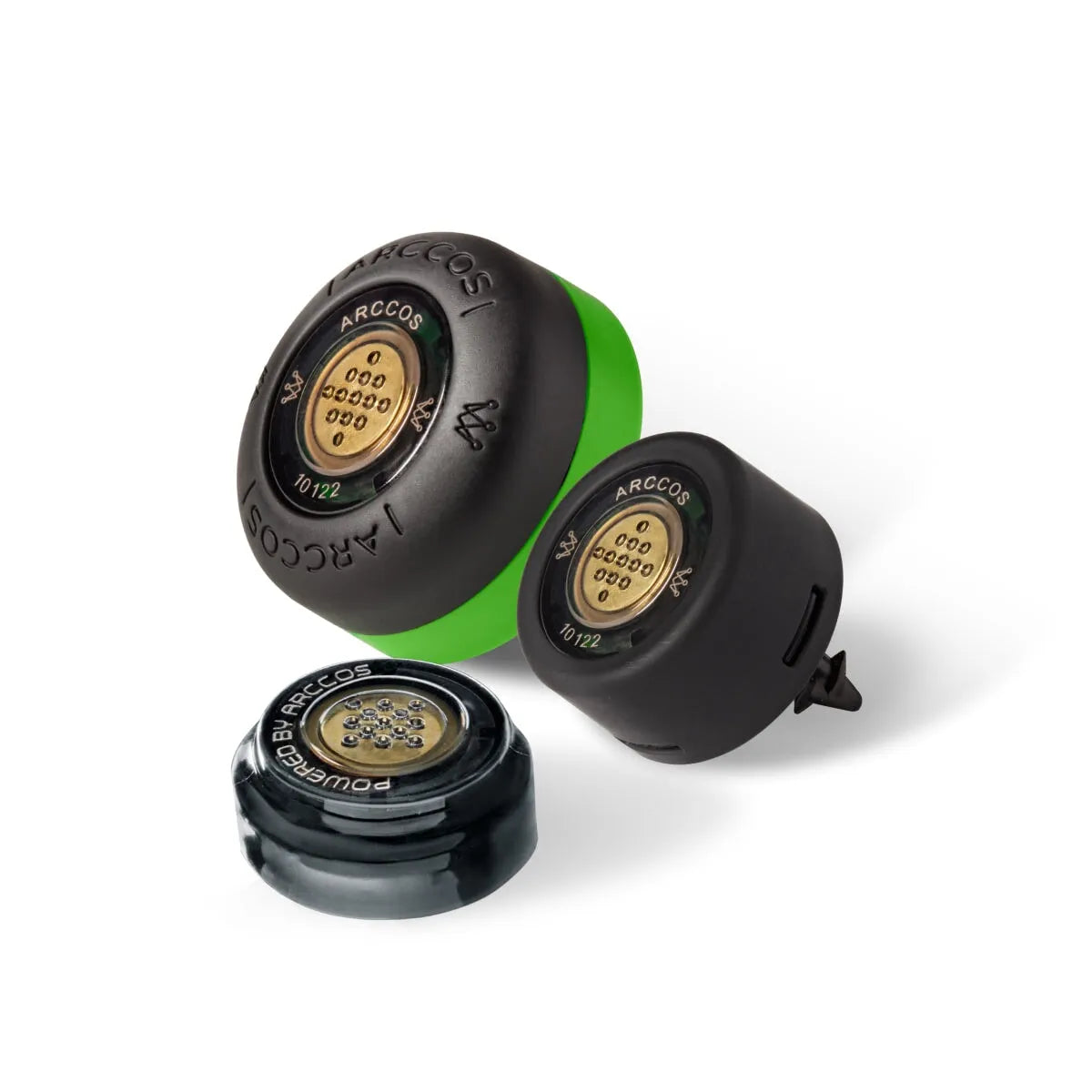
Arccos bridges that gap. Automatically tracking every shot, an AI powered insights built on 1.5 billion shots of real world data, and the Smart Laser, the first rangefinder adjusting for slope and wind and temperature and humidity and altitude, Arccos gives you the real data to play smarter.
Frequently Asked Questions
Why is the 12th hole at Augusta so difficult?
It's only 155 yards but it's the most dangerous par three in major championship golf. The tee is sheltered while the green sits exposed across Rae's Creek. Wind at address rarely matches wind mid flight, and subtle gusts can rob 10 to 15 yards of carry. Short is water. That's why Spieth, Tiger, and Molinari have all made massive numbers here on solid swings.
How does wind affect a golf shot?
Wind impacts distance, trajectory, and direction simultaneously. A headwind adds effective yardage. Crosswinds push the ball laterally, especially at the apex. The tricky part is that wind where you're standing often differs from wind 30 to 40 feet up where the ball is traveling. That's especially true on courses with elevation changes, tree cover, or water features.
What is a "Plays Like" distance?
It's the adjusted yardage accounting for real time conditions, not just raw measurement. A flag might be 150 yards away, but after factoring in headwind, elevation, temperature, and humidity, the shot might play like 165. Arccos pioneered this concept with their Smart Laser, which calculates it automatically.
What makes the Arccos Smart Laser different from a regular rangefinder?
Most rangefinders give point A to point B distance. Some add slope. But slope is only about 19% of what affects ball flight. The Arccos Smart Laser adjusts for slope and wind and gusts and temperature and humidity and altitude, all displayed as a Plays Like distance in the viewfinder. It also connects to the Arccos Caddie ecosystem for AI powered club recommendations.
Can Arccos help an average golfer?
The average golfer arguably benefits more than a pro, because most of us don't have a caddie doing environmental math on every shot. Arccos learns your personal distances, factors in conditions, and tells you which club to hit. Players have reported dropping around 4 strokes after just five rounds.
What is Amen Corner?
Amen Corner is holes 11, 12, and 13 at Augusta National, the stretch where Masters tournaments are won and lost. The combination of water, wind, elevation changes, and exposed greens creates conditions that shift from tee to green on the same hole. It's the most consequential three hole stretch in golf.


Share:
Introducing Arccos Smart Satellite – The First Space-Based Golf Performance System
We Tracked Real Rounds by Arccos Members at Augusta National. Here’s What the Data Reveals.