


There is a moment every golfer dreads at The Players Championship. It does not start on the 17th tee. It starts earlier, walking down the 16th fairway, when your eyes drift left across the water toward that small patch of green floating in the middle of a lake. The math begins before you even get there.
That is the genius and the cruelty of Pete Dye's most famous creation at TPC Sawgrass.
What Makes Hole 17 at TPC Sawgrass So Dangerous?
On paper, the par-3 17th looks easy. It plays just 137 yards. The green spans nearly 4,000 square feet, one of the largest putting surfaces on the Stadium Course. For a PGA Tour professional, this is a pitching wedge or gap wedge. A warm-up swing.
And yet since PGA Tour ShotLink tracking began in 2003, over 1,068 balls have found the water during The Players Championship, averaging 49 per tournament. In 2007, 93 balls hit the water in a single week, with 50 coming in the first round alone. The hole's all-time scoring average sits at 3.12, the highest of any par-3 under 150 yards on the PGA Tour over that span.
As Geoff Ogilvy once put it, in practice without much wind most pros would hit the green 99 out of 100 times. Add wind, add the 71st hole of The Players, and that number drops fast.
So what makes 137 yards so dangerous? One word: wind.
How Wind Turns a Wedge Shot Into a Nightmare
The 17th sits inside a natural amphitheater. Grandstands and towering live oaks ring the green on three sides, creating a stadium effect that funnels, redirects, and lies about what the wind is actually doing. The flag on the green might look still. The camera boom overhead could be whipping sideways. Former hole captain Dave Nordholm noted that morning winds typically blow from the west, but by afternoon the Atlantic sea breeze rolls in and reverses conditions entirely.
Club selection here is critically important. Justin Thomas once recalled hearing stories from Tiger Woods and Fred Couples about needing a 5 or 6-iron into a headwind at a 137-yard hole. That is not a distance problem. That is a wind problem.
Here is the key data point that most golfers miss: TPC Sawgrass is largely flat. Slope adjustment on a hole like this might shift your play yardage by 1 to 2 yards at most, since slope typically accounts for roughly 19% of a distance adjustment. What you are actually playing is wind yardage. A hole that reads 137 on the card, and maybe 138 adjusted for slope, can easily play 145 or more when a March gust is in your face. Miss by one club here, and you are not missing a fairway. You are in the water.
That is exactly what happened to J.J. Spaun in the 2025 Players Championship playoff against Rory McIlroy.
Historic Moments When Wind Decided The Players Championship
Spaun stood on the 17th tee trailing McIlroy by one shot, with a "chippy 8-iron" dialed in. He hit it cleanly. He thought it might be short. Instead, the wind floated the ball over the green and into the water behind it. Triple bogey. Tournament over.
He was far from the only victim. Sergio Garcia arrived at 17 in 2013 tied for the lead with Tiger Woods and found the lake twice. Len Mattiace hit two balls in the water while chasing his first PGA Tour win, making a quintuple-bogey 8 and finishing four strokes behind champion Justin Leonard. Bob Tway holds the all-time record on the hole, making a 12 in 2005 after hitting five balls in the water in a single round during fierce wind conditions.
In the 2025 final round, Alex Smalley's tee shot hit the green, bounced through the collar, and trickled slowly off the wooden planks into the water. A hole that requires a wedge had just ended three contenders' tournaments in one afternoon.
Pin Positions: Where the Real Risk Lives
The 17th green has three distinct sections, and not all of them are created equal. The front-left is the most forgiving. The back-right, used almost universally on Sunday, rewards precision but punishes any shot that runs long, since the green slopes back toward the water. The front-right is the most dangerous position on the green.
When the pin is tucked front-right, just paces from the edge, players are aiming at the smallest target on a green surrounded entirely by water. PGA Tour setup officials have openly discussed avoiding that position entirely in wet or windy conditions. The typical winning strategy is simple: land center-left, remove the right side from play, and take the birdie opportunity if it comes. Go at a tucked right pin without a precise read and without the right number, and you are gambling with your tournament.
Rickie Fowler, who owns the best scoring average on the hole among active players at 2.81, summed it up well: same club every time, gap wedge, but the wind changed all three times he birdied it on his way to winning the 2015 Players Championship.
Gain an Edge at the Island Green
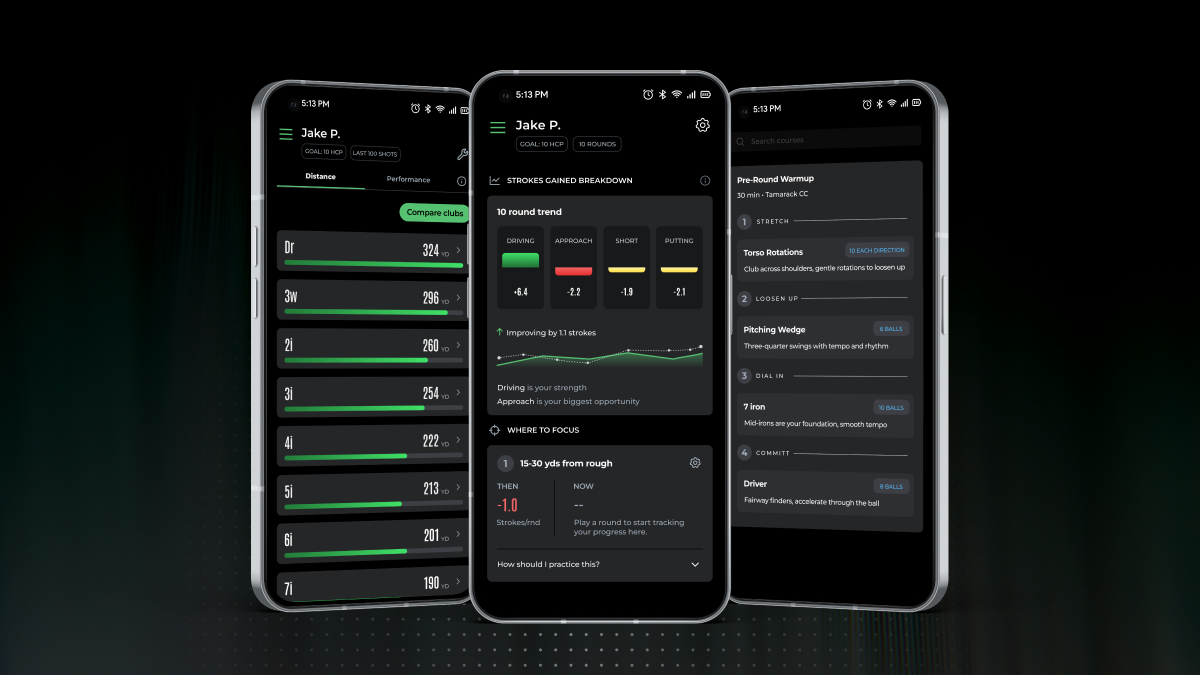
The 17th at TPC Sawgrass is the perfect example of a hole where having the right information before you pull a club is the difference between par and a splash. Two new Arccos features and 1 new Smart Laser are built exactly for moments like this.
Smart Laser Rangefinder: A True “Plays Like” Number
Your rangefinder reads 137. But as we covered, slope is nearly irrelevant here. What matters is the wind. The Arccos Smart Laser Rangefinder delivers slope-adjusted yardage alongside real-time wind speed and gusts, so you know what the shot is actually playing before you reach for a club. That 138-yard slope number could be playing 145 or more into a gusting headwind. At a hole where Tour pros have pulled 5-irons, knowing a true “Plays Like” distance is not optional. It is everything.
Green Maps: Know Where Not to Miss
The Arccos Green Maps feature gives you a detailed, data-backed view of the green's topography before you step on the tee. You can see exactly where the slopes run, where the safe landing zones are, and most importantly, how to play around a tucked front-right pin without taking on unnecessary risk. On an island green with no bail-out area, the decision of where to aim has to be made before you address the ball, not during the swing. Green Maps makes that decision clear.
AI Strategy: Take Emotion Out of the Equation
The hardest part of the 17th is not the shot itself. It is the decision-making under pressure with the crowd roaring and the leaderboard on the line. Arccos AI Strategy analyzes your personal shot tendencies, your miss patterns, your actual distance data, and current conditions including wind to recommend the right club and the right target for your game, not for a Tour pro's game, but for yours. It removes the second-guessing that has cost so many players at this hole.
Frequently Asked Questions About Hole 17 at The Players Championship
Why is hole 17 at TPC Sawgrass so hard? The hole plays just 137 yards but is surrounded almost entirely by water. The combination of wind swirling through a stadium-like amphitheater, firm greens with tight slopes, and tournament pressure makes club selection extremely difficult. Since 2003, over 1,068 balls have found the water at this hole during The Players Championship.
What club do pros hit on 17 at TPC Sawgrass? Depending on wind and pin position, most pros hit a pitching wedge, gap wedge, or 9-iron. In strong headwind conditions, players have reported needing a 5 or 6-iron to cover 137 yards.
Where is the pin usually placed on 17 at the Players Championship? Pin positions rotate throughout the week. Front-left is used on friendlier days, back-center and back-left are common in rounds 1 and 2, and the traditional Sunday location is back-right. The front-right pin is considered the most dangerous and is often avoided in windy or wet conditions.
How many balls go in the water on hole 17 at The Players? An average of 49 balls per tournament have found the water since tracking began in 2003. The single-week record is 93 in 2007, with 50 coming in the first round alone.
The Bottom Line
The 17th at TPC Sawgrass proves that golf's hardest moments are rarely about distance. They are about precision under pressure, reading conditions designed to deceive, and committing to a decision when every instinct tells you to hesitate.
The wind will swirl. The flat yardage will lie. The front-right pin will look closer than it plays. The players who survive all four days are the ones who know exactly what they are looking at before they pull a club. They play the real number, not the number on the yardage marker.
At the Island Green, information is not just an advantage. It is everything.
Explore Arccos AI Strategy, Green Maps, and the Smart Laser Rangefinder at arccosgolf.com



Share:
Arccos Smart Laser: A New Class of Rangefinder Sets a New Standard for Smarter Golf
Your Link Pro Just Got a Major Upgrade. Meet Arccos Air.